-
Address: 10430 FM 1097 W WILLIS, TX 77318
-
Phone: (936) 465-9981
-
Email: service@tghinsurance.com
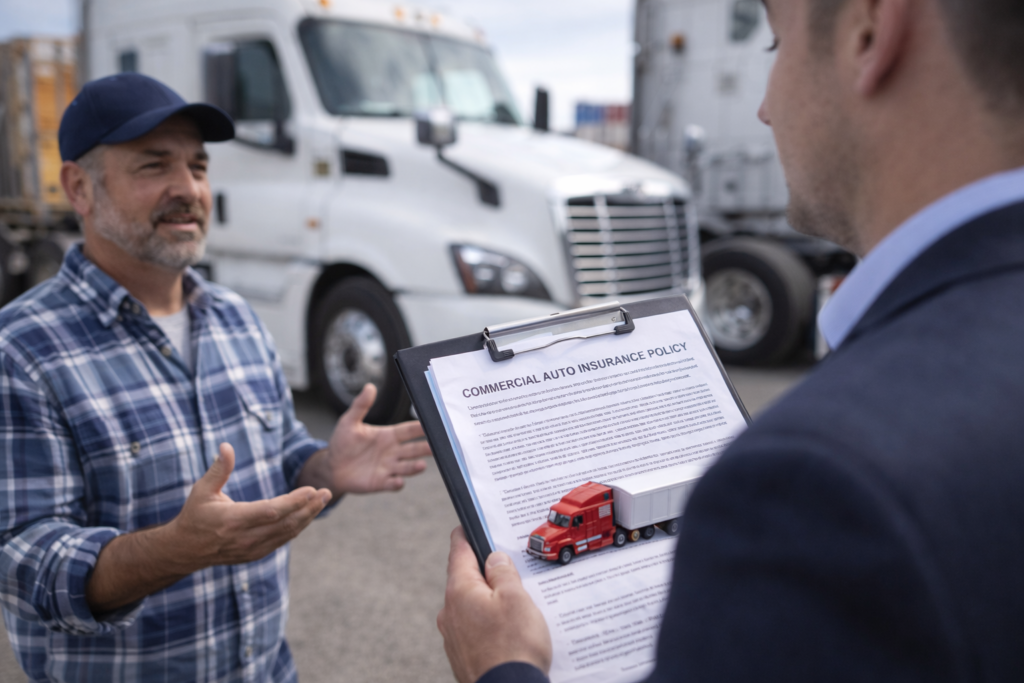
If you operate a trucking business in Texas — whether you’re hauling freight, equipment, materials, or specialized cargo — you’re facing one of the most demanding insurance environments in the country. Between federal regulations, state requirements, high liability exposures, and the constant risk of accidents, proper haul for hire insurance isn’t optional. It’s essential for survival.
At TGH Insurance, we specialize in protecting Texas trucking companies with comprehensive commercial auto insurance solutions. From owner-operators just starting out to established fleets with dozens of trucks, we understand the unique challenges you face on Texas highways and help you secure coverage that keeps you compliant, protected, and profitable.
This guide explains everything you need to know about haul for hire insurance in Texas: what it covers, what it costs, how to comply with regulations, and how to find the right coverage for your trucking operation.
What Is Haul for Hire Insurance?
Haul for hire insurance (also called trucking insurance or motor carrier insurance) is specialized commercial auto coverage designed for businesses that transport goods, materials, or equipment for compensation. It protects your trucking operation from financial loss due to accidents, cargo damage, liability claims, and other risks inherent to the transportation industry.
Unlike standard commercial auto insurance for delivery vans or service vehicles, haul for hire policies are designed for the elevated risks of:
- Long-haul interstate trucking
- Intrastate freight hauling
- Heavy equipment transport
- Hazardous materials shipping
- Oversized or specialized cargo
- Refrigerated transport (reefer)
- Flatbed and lowboy operations
The stakes are high: A single serious truck accident can result in millions of dollars in liability, property damage, medical expenses, cargo loss, and legal fees. Without proper coverage, one accident could bankrupt your business.
Why Texas Trucking Companies Face Unique Insurance Challenges
Texas presents specific challenges that make haul for hire insurance both critical and complex:
High Traffic Volume & Accident Risk
Texas has some of the busiest freight corridors in the nation — I-35, I-10, I-45, and I-20 see constant commercial traffic. High volumes increase accident probability, and Texas truck accidents often involve severe injuries or fatalities due to highway speeds.
Severe Weather Events
From Gulf Coast hurricanes and flooding to North Texas ice storms and Panhandle dust storms, Texas weather creates hazardous driving conditions that increase accident risk and cargo damage.
Stringent Federal & State Regulations
Texas trucking companies must comply with both Federal Motor Carrier Safety Administration (FMCSA) regulations and Texas Department of Motor Vehicles (TxDMV) requirements. Insurance compliance is strictly enforced, with violations resulting in fines, operating authority suspension, or license revocation.
High-Value Cargo Exposure
Texas is a major hub for oil and gas, construction materials, agriculture, manufacturing, and consumer goods. The cargo you haul often represents hundreds of thousands of dollars in value — creating significant liability if damaged or lost.
Litigation Environment
Texas has seen increasing nuclear verdicts (jury awards exceeding $10 million) in truck accident cases. Without adequate liability limits, these verdicts can destroy even well-established trucking companies.
Federal & Texas Requirements for Haul for Hire Insurance
FMCSA Minimum Liability Requirements
The Federal Motor Carrier Safety Administration mandates minimum liability coverage based on cargo type and truck weight:
General Freight (Non-Hazardous):
- 10,001-26,000 lbs GVWR: $300,000 minimum
- 26,001+ lbs GVWR: $750,000 minimum
Hazardous Materials:
- Any amount of placarded hazmat: $5,000,000 minimum
Passenger Transport (16+ passengers):
- $5,000,000 minimum
Oil & Gas Hauling:
- $1,000,000 minimum (for certain operations)
Texas-Specific Requirements
Texas Department of Motor Vehicles (TxDMV):
- Requires proof of financial responsibility (insurance or bond)
- Minimum $750,000 liability for intrastate freight carriers
- Additional requirements for certain cargo types
MCS-90 Endorsement: Required for all interstate carriers, the MCS-90 endorsement ensures your policy meets federal minimum requirements and protects the public in case of policy lapses or exclusions.
Certificate of Insurance (COI) Requirements
You’ll need to provide certificates of insurance to:
- Freight brokers and shippers
- Government agencies (FMCSA, TxDMV)
- Leasing companies for financed trucks
- Facilities where you load or unload cargo
Failure to maintain continuous coverage results in:
- FMCSA operating authority suspension
- TxDMV registration revocation
- Inability to secure loads
- Potential personal liability for accidents
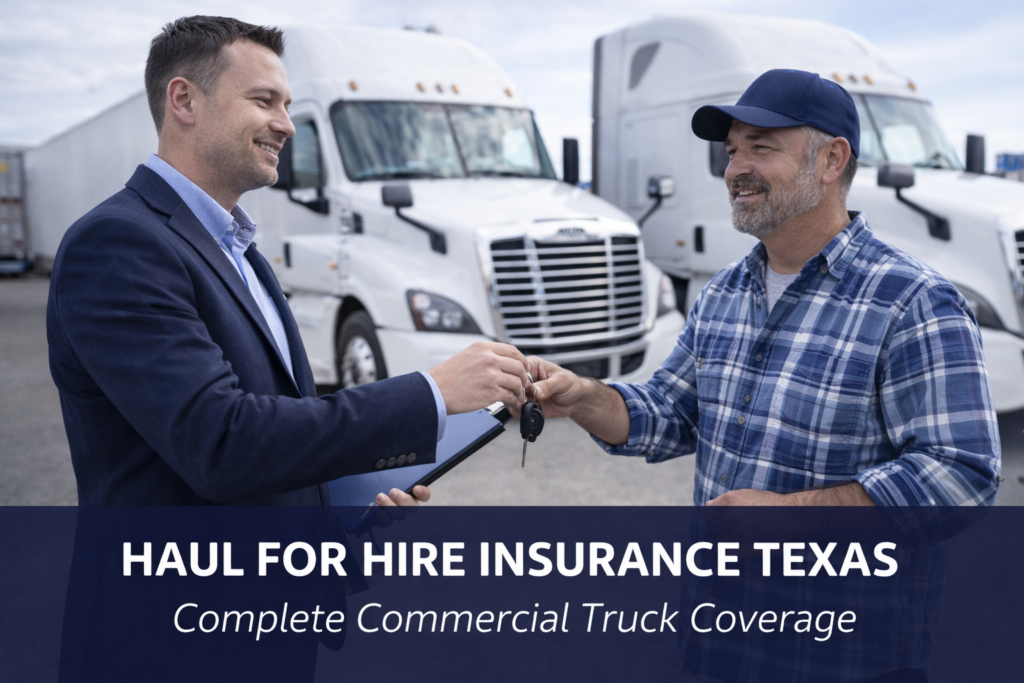
Essential Coverage Types for Texas Haul for Hire Operations
1. Primary Liability Insurance
What it covers: Bodily injury and property damage you cause to others while operating your commercial vehicle.
Why you need it: This is your first line of defense in any accident where you’re at fault. It covers medical expenses, vehicle repairs, property damage, and legal defense costs.
Coverage limits:
- Minimum: $750,000 (federal requirement for most operations)
- Recommended: $1,000,000-$2,000,000
- High-risk operations: $5,000,000+
Real scenario: Your semi-truck rear-ends multiple vehicles on I-45 during heavy traffic, injuring several people and causing extensive property damage. Primary liability covers the medical bills, vehicle repairs, and your legal defense.
Cost factor: Liability insurance is typically the largest portion of your haul for hire premium, often representing 40-60% of total costs.
2. Physical Damage Coverage
What it covers: Damage to your own trucks and trailers due to collision, rollover, fire, theft, vandalism, or weather events.
Collision Coverage: Pays to repair or replace your truck after an accident, regardless of fault.
Comprehensive Coverage: Covers non-collision damage such as:
- Hail damage
- Theft or vandalism
- Fire or explosion
- Hitting an animal
- Falling objects
- Flood damage
Specified Perils: A more limited (and cheaper) alternative that covers only specifically named events.
Why you need it: Commercial trucks represent $50,000-$150,000+ investments. Physical damage coverage ensures you can repair or replace your truck after an incident without devastating out-of-pocket costs.
Deductible considerations:
- Typical deductibles: $1,000-$5,000
- Higher deductibles = lower premiums
- Consider your cash flow when selecting deductible amounts
Important note: Physical damage coverage is often required by lenders if you’re financing your truck.
3. Cargo Insurance
What it covers: Loss or damage to the freight you’re hauling due to accidents, theft, weather, or other covered perils.
Why you need it: You’re legally liable for cargo in your possession. If freight is damaged, destroyed, or stolen while under your care, you’re responsible for its value — often $50,000-$250,000+ per load.
Coverage limits:
- Standard: $100,000 per load
- Recommended: Match your typical cargo value
- High-value freight: $250,000-$500,000+
What’s typically covered:
- Collision damage to cargo
- Theft of cargo from truck or trailer
- Weather-related damage
- Refrigeration breakdown (with proper endorsement)
- Loading and unloading accidents
What’s typically NOT covered:
- Cargo you don’t have legal liability for
- Inherent vice (cargo that naturally deteriorates)
- Improper packaging by shipper
- Acts of war or terrorism (without special endorsement)
Real scenario: You’re hauling $150,000 worth of electronics when your trailer is stolen from a truck stop. Cargo insurance reimburses the shipper for the loss, protecting your business from financial ruin and legal action.
Broker requirements: Most freight brokers require minimum $100,000 cargo coverage before allowing you to haul their loads.
4. Motor Truck Cargo Legal Liability
What it covers: An alternative to traditional cargo insurance, covering only cargo for which you have legal liability.
Difference from cargo insurance:
- Cargo insurance: Covers all cargo regardless of liability
- Cargo legal liability: Covers only cargo you’re legally responsible for
When to use it: If you haul cargo that frequently changes in value or type, cargo legal liability may offer more flexibility and lower cost.
5. Non-Trucking Liability (Bobtail Insurance)
What it covers: Liability coverage when you’re operating your truck WITHOUT a trailer and NOT under dispatch (personal use, commuting, or traveling between loads).
Why you need it: Your primary liability policy typically covers you only when hauling freight under dispatch. Bobtail insurance fills the gap during personal use.
Real scenario: You’re driving your tractor home from dropping a trailer when you cause an accident. Your primary liability won’t cover this because you’re not under dispatch — but bobtail insurance will.
Cost: Relatively inexpensive, often $300-$800/year.
Requirement: If you lease your truck to a carrier, bobtail insurance is typically required.
6. General Liability Insurance
What it covers: Bodily injury and property damage that occurs during non-driving business operations (loading docks, warehouses, maintenance facilities, etc.).
Why trucking companies need it: Accidents don’t just happen on the road. General liability protects you from:
- Slip-and-fall injuries at loading facilities
- Property damage while loading/unloading
- Product liability claims
- Advertising injury claims
Coverage limits: Typically $1,000,000 per occurrence, $2,000,000 aggregate.
Real scenario: While loading freight at a warehouse, your forklift damages the building’s dock door. General liability covers the repair costs.
7. Workers’ Compensation Insurance
What it covers: Medical expenses and lost wages for employees injured on the job.
Texas requirement: While Texas doesn’t require most private employers to carry workers’ comp, it’s highly recommended for trucking companies due to elevated injury risks.
Why trucking companies need it: Truck drivers face significant injury risks:
- Loading and unloading injuries
- Slip and falls from trailers
- Back injuries from climbing in/out of cabs
- Accidents during roadside repairs
Without workers’ comp: Injured employees can sue your business directly for unlimited damages. One serious injury lawsuit could bankrupt your company.
Cost considerations: Workers’ comp for trucking is expensive (typically 8-15% of payroll) due to high injury risk, but the protection is worth it.
8. Occupational Accident Insurance
What it covers: An alternative to workers’ comp for owner-operators and independent contractors, covering medical expenses and disability from work-related injuries.
Key differences:
- Lower cost than traditional workers’ comp
- Designed specifically for independent contractors
- May have benefit caps and exclusions
When to use it: If you’re an owner-operator without employees, occupational accident insurance provides affordable injury protection.
9. Trailer Interchange Insurance
What it covers: Physical damage to trailers you’re hauling under an interchange agreement (trailers you don’t own but are responsible for).
Why you need it: If you regularly pull trailers owned by others, you’re responsible for damage that occurs while in your possession. Trailer interchange coverage protects you from financial loss.
Coverage limits: Typically match the value of trailers you haul, often $25,000-$100,000.
10. Rental Reimbursement Coverage
What it covers: The cost of renting a replacement truck while yours is being repaired after a covered loss.
Why you need it: When your truck is out of commission, you’re losing revenue. Rental reimbursement helps you stay operational during repairs.
Coverage limits: Typically $100-$200 per day, 30-60 day maximum.
How Much Does Haul for Hire Insurance Cost in Texas?
Insurance costs vary dramatically based on numerous factors. Here’s what influences your premium:
Business Factors
- Years in business: New carriers pay 30-50% more than established companies
- Driving records: Clean MVRs reduce costs significantly
- Claims history: Even one major claim can increase premiums 25-100%
- Operating radius: Interstate carriers pay more than local/regional
- Annual mileage: Higher miles = higher premiums
- Type of freight: Hazmat and refrigerated cost more than dry van
Driver Factors
- Age and experience: Drivers under 25 or with <2 years experience cost more
- CDL type and endorsements: Proper endorsements reduce risk
- Safety training: Completing defensive driving courses lowers costs
- Drug and alcohol testing program: Required and impacts rates
Equipment Factors
- Truck age: Newer trucks (0-5 years) cost less to insure
- Truck value: Higher-value trucks = higher physical damage premiums
- Safety features: ELDs, dash cams, collision avoidance systems reduce costs
- Number of trucks: Fleets often get volume discounts
Coverage Factors
- Liability limits: Higher limits = higher premiums
- Deductibles: Higher deductibles = lower premiums
- Coverage breadth: Comprehensive packages cost more than basic coverage
Typical Cost Ranges for Texas Haul for Hire Insurance:
Owner-Operator (1 truck, general freight):
- Basic coverage: $8,000-$12,000/year
- With physical damage & cargo: $12,000-$18,000/year
- New operator with limited experience: $15,000-$25,000+/year
Small Fleet (2-5 trucks):
- Per truck: $7,000-$15,000/year
- Total annual premium: $35,000-$75,000+
Established Fleet (10+ trucks):
- Per truck: $6,000-$12,000/year
- Volume discounts available: 10-20% savings
Specialized Operations (hazmat, oversized, reefer):
- Add 25-100% to standard rates depending on cargo type
High-risk operators (poor MVR, recent claims):
- Add 50-200% to standard rates, or face difficulty finding coverage
The bottom line: The best way to determine accurate costs is through a personalized quote from a commercial trucking insurance specialist.
How to Lower Your Haul for Hire Insurance Costs
Trucking insurance is expensive, but these strategies can help reduce your premiums:
✅ Maintain Clean Driving Records
- Zero accidents and violations = significant discounts
- One at-fault accident can increase premiums 25-40%
- Major violations (DUI, reckless driving) can make you uninsurable
✅ Invest in Safety Technology
- Dash cams: Prove you’re not at fault in accidents (10-20% discount)
- Electronic Logging Devices (ELDs): Required and help prove compliance
- Collision avoidance systems: Reduce accident frequency
- Lane departure warnings: Prevent common highway accidents
- GPS tracking: Helps recover stolen trucks and monitor driver behavior
✅ Implement Strong Safety Programs
- Regular safety training for all drivers
- Pre-trip inspection compliance
- Preventive maintenance schedules
- Drug and alcohol testing program
- Safety incentive programs for drivers
✅ Improve Your CSA Score
The FMCSA’s Compliance, Safety, Accountability (CSA) program directly impacts insurance costs. Maintain a strong CSA score by:
- Passing DOT inspections
- Addressing violations immediately
- Maintaining proper logs and documentation
- Keeping vehicles well-maintained
✅ Increase Deductibles Strategically
- Raising deductibles from $1,000 to $2,500 can save 15-25% on physical damage premiums
- Only increase deductibles if you have cash reserves to cover them
✅ Bundle Coverage
- Purchasing multiple policies from one carrier often results in package discounts
- Consider bundling liability, physical damage, cargo, and general liability
✅ Pay Annually Instead of Monthly
- Annual payments avoid installment fees (often 10-15% of premium)
- Some carriers offer 5-10% discounts for paid-in-full policies
✅ Work with an Independent Agent
- Independent agents shop multiple carriers for competitive rates
- They understand which insurers specialize in your operation type
- They can identify coverage gaps that might cost more later
Common Haul for Hire Insurance Mistakes to Avoid
❌ Underinsuring Liability Limits
The mistake: Carrying only the minimum $750,000 liability to save money.
Why it’s dangerous: Nuclear verdicts in truck accidents regularly exceed $10 million. If you’re underinsured, plaintiffs can pursue your personal assets, business assets, and future earnings.
Better approach: Carry at least $1-2 million in liability, with umbrella coverage for high-risk operations.
❌ Not Having Adequate Cargo Coverage
The mistake: Skipping cargo insurance or carrying insufficient limits.
Why it’s dangerous: You’re legally liable for cargo in your possession. Without coverage, a single stolen or damaged load could cost $100,000+ out of pocket.
Better approach: Match cargo coverage to the value of freight you typically haul.
❌ Forgetting Bobtail/Non-Trucking Liability
The mistake: Assuming your primary liability covers all truck operation.
Why it’s dangerous: Driving your tractor without a trailer or for personal use creates a coverage gap. One accident could leave you with zero coverage.
Better approach: Always carry bobtail insurance if you operate your truck outside of dispatch.
❌ Hiring Unqualified or High-Risk Drivers
The mistake: Hiring drivers with poor MVRs, limited experience, or failed drug tests to fill seats quickly.
Why it’s dangerous: High-risk drivers dramatically increase premiums (50-100%+) and some may be uninsurable, forcing you to find expensive specialty markets.
Better approach: Maintain strict hiring standards. The money saved on insurance far exceeds the cost of being selective.
❌ Not Updating Coverage as Business Changes
The mistake: Failing to notify your insurer when you add trucks, change cargo types, expand operating radius, or hire new drivers.
Why it’s dangerous: Coverage gaps or policy violations could void your coverage entirely, leaving you exposed during a claim.
Better approach: Immediately notify your agent of any business changes.
❌ Shopping Price Alone
The mistake: Choosing the cheapest policy without reviewing coverage details, carrier financial strength, or claims service.
Why it’s dangerous: Cheap policies often have restrictive exclusions, low coverage limits, or carriers with poor claims-paying reputations. When you need them most, they may deny claims or go bankrupt.
Better approach: Balance cost with coverage quality and carrier reputation.
❌ Not Reading Policy Exclusions
The mistake: Assuming your policy covers everything related to trucking.
Why it’s dangerous: Common exclusions include certain cargo types, operation outside your stated radius, leasing trucks to others, and more.
Better approach: Review your policy thoroughly with your agent to understand exactly what is and isn’t covered.
How to Choose the Right Haul for Hire Insurance Provider
Not all trucking insurance carriers are created equal. Here’s what to look for:
✅ Industry Specialization
Choose an insurer and agent that specializes in trucking and transportation. They understand your risks better than generalist insurers.
✅ Financial Strength
Only work with carriers rated “A-” or better by A.M. Best. You need assurance they’ll be able to pay large claims.
✅ Claims Service Reputation
Research how carriers handle trucking claims. Fast, fair claims service can be the difference between staying in business or closing after an accident.
✅ Coverage Flexibility
Look for carriers that offer customizable coverage options to match your specific operation type.
✅ Competitive Pricing
While price shouldn’t be the only factor, you should ensure you’re getting fair market rates. Independent agents can shop multiple carriers to find the best value.
✅ Regulatory Compliance Expertise
Your agent should understand FMCSA and TxDMV requirements and ensure your policy meets all compliance standards.
Why Choose TGH Insurance for Haul for Hire Coverage?
At TGH Insurance, we understand that trucking is a tough business with razor-thin margins. Every dollar counts, but cutting corners on insurance isn’t the answer. Our job is to protect your livelihood while helping you stay competitive.
What Sets TGH Insurance Apart:
✔ Trucking Industry Expertise We specialize in haul for hire insurance and work extensively with Texas trucking companies. We understand your unique challenges and know which carriers offer the best coverage for your operation type.
✔ Independent Agency Advantage We’re not locked into one insurance company. We shop multiple carriers to find you the best combination of coverage and price.
✔ FMCSA & TxDMV Compliance We ensure your coverage meets all federal and state requirements, providing properly endorsed policies and timely filings.
✔ Fast Certificate Issuance Need a certificate of insurance for a broker or shipper? We provide same-day COIs so you can secure loads without delays.
✔ Claims Advocacy When accidents happen, we’re your advocate. We work directly with carriers to ensure you get fair, fast claim resolutions so you can get back on the road.
✔ Customized Coverage Solutions Whether you’re an owner-operator with one truck or a fleet operator with 50+ units, we design coverage packages tailored to your specific operation.
✔ Competitive Pricing We work with carriers that specialize in Texas trucking and offer competitive rates for both new and established operators.
✔ Long-Term Partnership We’re not just here to sell you a policy. We conduct annual reviews, help you adjust coverage as you grow, and provide ongoing risk management guidance.
Types of Haul for Hire Operations We Insure
TGH Insurance provides specialized coverage for:
- General Freight Hauling – Dry van, flatbed, step deck
- Refrigerated Transport (Reefer) – Temperature-controlled cargo
- Hazardous Materials – Placarded hazmat requiring special endorsements
- Heavy Haul & Oversized Loads – Construction equipment, machinery
- Auto Hauling – Car carriers and vehicle transport
- Tanker Operations – Liquid and bulk transport
- Intermodal & Drayage – Container transport to/from ports and rail yards
- LTL (Less Than Truckload) – Multi-stop delivery routes
- Dedicated Contract Carriage – Exclusive shipper contracts
- Owner-Operators – Independent contractors and single-truck operations
- Small to Medium Fleets – 2-50+ trucks
- New Venture Trucking – Startup carriers establishing authority
Frequently Asked Questions
What’s the difference between trucking insurance and commercial auto insurance?
Trucking (haul for hire) insurance is specifically designed for businesses that transport goods for compensation and includes higher liability limits, cargo coverage, and compliance with FMCSA regulations. Standard commercial auto insurance is for business vehicles but doesn’t provide the specialized coverages trucking operations need.
Do I need a DOT number to get haul for hire insurance?
Yes. To operate interstate commerce (crossing state lines), you need a USDOT number from the FMCSA. To haul freight for hire, you also need Motor Carrier (MC) operating authority. Your insurance company will file an MCS-90 endorsement with your DOT number to meet federal requirements.
Can I get insurance as a brand new trucking company?
Yes, but expect higher premiums. New ventures typically pay 30-50% more than established companies. Having prior trucking experience, clean driving records, and proper safety programs can help reduce costs.
What if I have a poor driving record or past claims?
You can still get coverage, but expect to pay significantly higher premiums or work with specialty high-risk carriers. Focus on improving your CSA score, maintaining a clean record going forward, and implementing strong safety programs to gradually reduce costs.
How quickly can I get coverage?
With complete information (MVRs, DOT number, vehicle details, cargo types), most carriers can bind coverage within 24-48 hours. However, some high-risk applications may take longer for underwriting review.
Do I need insurance for trucks that are parked and not in use?
If trucks are registered and have active plates, they typically need at least comprehensive coverage. However, some carriers offer “layup” policies with reduced coverage for trucks temporarily out of service.
What happens if my insurance lapses?
FMCSA will suspend your operating authority, TxDMV will revoke your registration, brokers will remove you from their carrier lists, and you could face personal liability for any accidents that occur during the lapse. Maintain continuous coverage at all times.
Can I add or remove trucks from my policy throughout the year?
Yes. Most policies allow you to add or remove trucks with pro-rated premium adjustments. Always notify your agent immediately when your fleet changes to ensure proper coverage.
Get Your Haul for Hire Insurance Quote Today
Running a successful trucking business in Texas requires more than just a good truck and a CDL. It requires comprehensive insurance protection that keeps you compliant, protects your assets, and gives you peace of mind on every haul.
Whether you’re launching a new trucking venture, expanding your fleet, or looking for better rates on your existing coverage, TGH Insurance is here to help you find the right protection at competitive prices.
Ready to protect your trucking business?
Call TGH Insurance: (936) 465 -9981
Email: Insuranceguy@tghinsurance.com
Get a Quote Online: https://www.tghinsurance.com/
Serving: Texas trucking companies statewide
Don’t wait until it’s too late. Get properly insured today and drive with confidence tomorrow.
Important Disclaimer
The information provided in this article is for general informational purposes only and should not be considered legal or professional insurance advice. Insurance requirements, regulations, and coverage needs vary by operation type and individual circumstances. Consult with a licensed commercial insurance professional at TGH Insurance to discuss your specific situation and obtain proper coverage recommendations that meet all federal and state requirements.